Yearly Archives: 2026

Easy-to-Grow Indoor Herbs for Winter

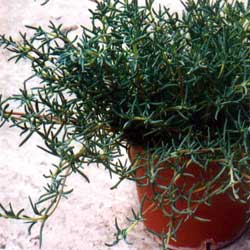
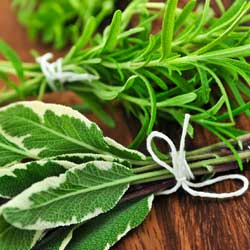
Even though it may be miserable weather outside, you don’t have to be stuck buying overpriced fresh herbs at the store or using less flavorful dried herbs. Why not grow your own inside the house? Most common herbs will grow quite happily in a sunny window at any time year, even when the weather outside is less than garden-friendly.

Where to Grow Your Herbs

Any sunny window can be great for growing indoor herbs, but most people prefer to keep their herbs in the kitchen. After all, it’s probably warm and sunny there. Moreover, think how great it would be to just reach over to your indoor herb garden, take a few snips of this and that, and serve “garden fresh” tasting foods to your family and guests.

Best Indoor Herb Choices

Wondering what herbs will do best indoors? The most popular and easily grown herbs for your kitchen garden include…

Basil Oregano
Chives Parsley
Lemon Balm Rosemary
Marjoram Sage
Mint Thyme

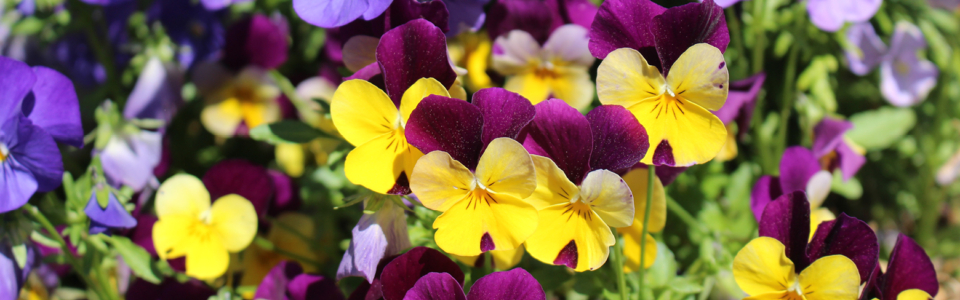
Herbs are great, but don’t overlook edible flowers as well! Pansies, marigolds and nasturtiums grow well inside the house when given sufficient light and add whimsical color and texture to salads and other meals.

Easy Tips for Growing Herbs Indoors

Growing herbs is no different than growing most houseplants. Luckily, herbs aren’t as fussy as many other plants. To grow the best, freshest and most flavorful herbs, consider…

  • Light
    Brighter is better. South, southwest or western-facing windows should provide a minimum of four hours of sunlight. If none of your windows provides this, you may want to add indoor grow lights to supplement the sunlight your herbs receive.
  • Soil
    Herbs do not require rich soil nor will they do well in heavy soil. Be sure to use a prepackaged potting mix instead of outdoor garden soil that may contain insects and weeds. Special herb mixtures provide the perfect balance of drainage, water retention and fertility for growing herbs.
  • Fertilizing
    Plan to fertilize more frequently than you would if your herbs were growing outdoors. Fertilize every other week with a weak solution of liquid fertilizer.
  • Watering
    Because some herbs prefer more water than others, it is best to plant different herbs in separate pots. When choosing a pot, remember a smaller pot will dry out sooner than a larger pot and will require more frequent watering. Clay pots dry more quickly than plastic or ceramic. It’s a good idea to give your herbs a quick monthly “rain” shower under the faucet to wash off house oils and dust.
  • Drainage
    Herbs don’t like sitting in wet soil, so pots with drainage holes at the bottom are essential. Be sure to use a saucer or pan to catch the draining water and prevent damage to your windowsill or table, but do not let the pot sit in a puddle for long or it may encourage root rot.
  • Harvesting
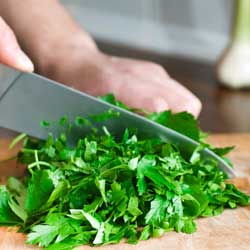
    When you’re ready to enjoy your herbs, snip and use the older leaves to encourage more plant growth. Keeping the plant smaller and bushier discourages flowering that changes the taste. Although the plants will be smaller and less lush than those grown outside, their flavor and convenience will make you forget about the winter weather!

When spring returns, you may find yourself addicted to growing your herbs in pots. After all, pots contain unruly herbs such as mint, can be decoratively arranged on your deck or balcony and continue providing delicious and healthful benefits in your cooking for many months. Bon appétit!
EasytoGrowHerbs_1EasytoGrowHerbs_2

EasytoGrowHerbs_3

Japanese Pieris

Looking for an easy-care spring-blooming shrub that supplies year-round beauty? Take a look at Japanese Pieris this season – you won’t be disappointed!

About Japanese Pieris

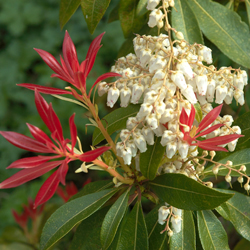
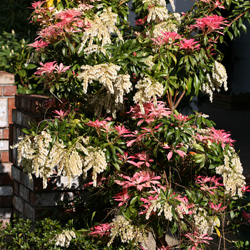
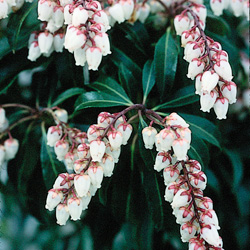
Pieris japonica is an upright evergreen shrub with spreading branches. It has the potential to grow 6-8 feet high and 4-6 feet wide. This is an easy to care for four-season plant that can be a stunner in the yard throughout the year. Except when they emerge in early spring with a bronzy hue, the leaves of the Pieris are lance-shaped and glossy deep-green throughout the year. The flowers appear in April and last well into May. The urn-shaped blooms, like those of lily-of-the-valley, hang in heavy, drooping, pendulous clusters that are 3-6 inches long. The fruit is ornamental and will persist through the winter, but it is best to remove the fruit so that the plant will put its energy into developing next year’s flowers.

Growing Tips

Not as fussy as other ericaceous plants like heath and heather, Pieris prefers a moist, well-drained, acidic soil with a pH in the range of 5.0-6.0. When planting, amend soil with plenty of peat moss; this will aid in drainage and help make the soil more acidic. Organic matter like compost should be added to compacted soil to increase drainage and should also be added to sandy soil to enhance water retaining capability. Sulfur may be added to the soil to lower the pH if it is too high. After planting, mulch the soil around the base of the plant with two inches of bark mulch, making sure to keep it from touching the trunk of the shrub. Pine bark mulch is a good choice when mulching Pieris because it will acidify the soil as it decomposes.

Pieris likes a semi-shady location and will flower best in areas where it receives some sun during the day. Protect all broadleaf evergreens from the prevailing winter winds. If this is not possible, spray them in the winter with Wilt-Pruf, an anti-desiccant, to prevent winter burn. Pieris must be watered frequently during the first year after planting to encourage root growth. The addition of a root stimulator at planting time will encourage the plant to quickly create deep, strong roots. After becoming established, Pieris is relatively drought tolerant but does, of course, grow best with consistent adequate moisture and regular fertilization.

Pruning Pieris is usually not required. When purchasing, know the ultimate size of the cultivar you desire so that you may choose a suitable location in your landscape where the plant may grow to its full potential. If pruning is necessary, prune immediately after flowering so as not to interfere with the formation of next season’s buds.

Pieris in the Landscape

Pieris mixes well with shade-loving plants that require acidic soils such as azaleas and rhododendrons. Highly diversified in its design use, Pieris works well in a Japanese garden, woodland setting, shrub border, foundation or even a mass planting. The smaller varieties look great in containers and rock gardens. Pieris is deer-resistant as well, making it a great border or screen for other plants.

Cultivars

We have a great collection of Pieris cultivars to satisfy the novice as well as the discriminating connoisseur. Consider the following varieties, or come in to see the latest Pieris types and let us help you choose the best one for your landscape.

  • ‘Brookside’ – New growth is chartreuse. It has upright white flowers and a dwarf habit, maturing at only 1-2 feet tall.
  • ‘Brower’s Beauty’ – Compact form, 4 feet wide by 6 feet high. This is a heavy bloomer with large trusses of white flowers in spring.
  • ‘Cavatine’ – This is a low growing, compact mounding cultivar with white flowers that are held upright on the plant. This cultivar blooms slightly later than others.
  • ‘Dorothy Wycoff’ – Compact form, 4 feet wide by 6 feet high. Dorothy has dark red buds opening to pale pink flowers.
  • ‘Flaming Silver’ – Leaves emerge a brilliant red, turning green with a pink margin and finally becoming green with a silver-white edge. This cultivar matures at 6 feet wide by 6 feet high.
  • ‘Forest Flame’ – Light pink leaves mixed among brilliant red appear after the plant has finished blooming in spring. Flowers are white. This Pieris grows 8-10 feet tall.
  • ‘Mountain Fire’ – With its vivid fiery-red new growth, clean white flowers and a compact uniform growth habit, this Pieris has become increasingly popular in the last few years. ‘Mountain Fire’ matures at 4 feet high by 4 feet wide.
  • ‘Prelude’ – This cultivar would make a wonderful addition to any rock garden. It is a dense mounding, low growing plant with red new growth that blooms slightly later than most other Pieris.
  • ‘Valley Fire’ – The young growth on this vigorous grower is a brilliant red. This cultivar has white flowers that are larger than most other Pieris.
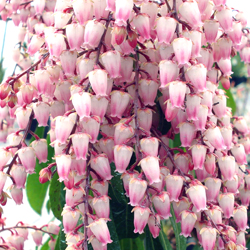
  • ‘Valley Valentine’ – This Pieris has deep maroon flower buds on pendulous flower stems that open into deep rose-pink, long-lasting flower chains. It is a slow-growing cultivar with a compact mounding habit maturing at about 5 feet tall by 6 feet wide.
  • ‘Variegata’ – Attractive leaves are green with white margins. Flowers gracefully droop in white clusters. This Pieris grows to 5 feet tall in the garden or landscape.

PIERIS-3PIERIS-4

PIERIS-5

Family Gardening: Attracting Wildlife to the Garden

Attracting wildlife to the home garden is an enjoyable and creative way to teach children about nature, evoke their respect for the environment and provide meaningful family together time. Many things that are good for wildlife are equally good for a wholesome, thoughtful garden – win-win!

 Covering the Basics

 All wildlife – butterflies, birds, squirrels, snakes, deer, etc. – requires three things for survival: food, water and cover. When you meet these basic needs in the garden, you can expect a variety of visitors.

  • Food
    Native trees, shrubs, vines and wildflowers provide the foliage, nectar, pollen, berries, seeds and nuts that wildlife requires to survive and thrive. As an added advantage, natives are well adapted to their particular geographic area and therefore are more disease and pest-resistant and generally require little extra fertilization, supplemental watering or other maintenance.

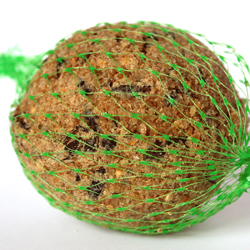
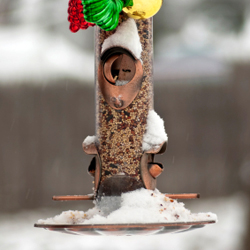
    There will be times when natural food sources are not readily available, especially in late winter when many stores of food are exhausted or early spring before natural supplies are replenished. This is when it is most important to provide supplemental sources of food using bird, squirrel and butterfly feeders to add to the native food sources for resident and migrating wildlife.

  • Water
    All wildlife requires a source of clean water for drinking and bathing. Many of us do not have a natural water source on our properties but this situation is easily remedied by adding a garden bird bath or water dish. With larger landscapes, adding a pond, fountain or pondless waterfall is an ambitious and rewarding project that will greatly enhance your efforts to increase the wildlife population. If space and your budget permits, you might even consider a tiered stream or other extensive feature.
  • Cover
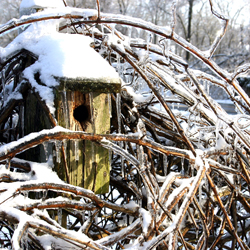
    Wildlife requires a place to hide from predators, shelter in inclement weather and a secluded place to birth their young. Trees, both dead and alive, are perfect for hiding, nesting and perching. Leafy and thorny shrubs also provide wildlife protection and a suitable hiding place. Tiers of plants are most desirable, and thicker, denser plantings such as thickets or groves will be very attractive. Even if you have plenty of vegetation already, the addition of bird and bat houses will increase areas of wildlife safety in your landscape.

Native Plants to Benefit Wildlife

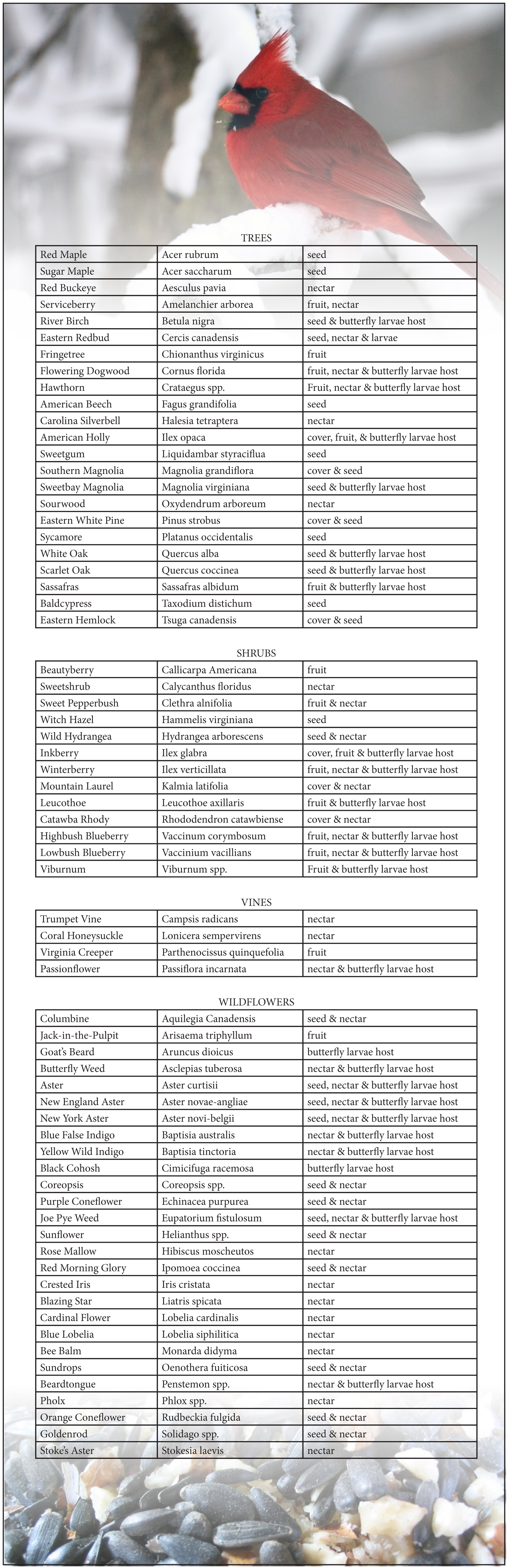
All types of plants, from trees to vines to shrubs to flowers, can provide food, water and cover to wildlife, but some plants are more useful than others. These handy lists can help you choose the best options for your landscape and the type of help you want to give backyard birds, butterflies, squirrels, deer and other visitors.

Note: “Seed” denotes abundant seeds that are attractive and nourishing for wildlife; “Nectar” denotes blooms butterflies and hummingbirds will sip from; “Fruit” denotes berries or other small fruits to feed wildlife; “Host” denotes a nourishing host plant for butterfly larvae.

wildlife-chart

Still not sure about the best plants for your backyard wildlife? Come on in and we’ll help you select just the plants you need for the wildlife you want to welcome to your yard!

wildlife-2

wildlife-3

http://www.istockphoto.com/ggustin

Seed Starting

Starting seeds indoors is a rewarding gardening experience and can help extend your growing season to include more plant varieties than your outdoor season may permit. Furthermore, a larger selection of seed varieties doesn’t limit your opportunities to growing only those transplants that are available at planting time. The key to success in growing seedlings is in creating the proper environment.

What Seeds Need

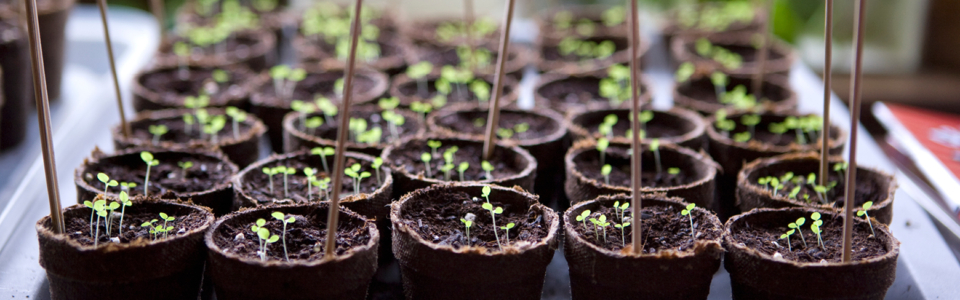
Seeds are generally hardy, but to start them properly they do need gentle nurturing so they can produce healthy, vibrant plants. In general, seeds should be started 4-6 weeks before the recommended planting time so the seedlings will be large and strong enough to withstand the stresses of transplanting. Use a sterile growing mix which is light enough to encourage rich root growth. Sow the seeds thinly and cover lightly with sphagnum peat moss. Water using a fine spray but do not soak the seeds – they also need oxygen to germinate, and if they are overwatered they will drown. Cover the container with clear plastic to hold the moisture and increase humidity. Place the containers in a warm (70-80 degrees) spot and watch daily for germination. The top of the refrigerator is often an ideal location. When the first seeds germinate, place the seedlings in bright light or under artificial lights (tube lights should be 2-3” from seedling tops) for several hours each day, since late winter sunlight will not usually be sufficient to prevent weak, leggy seedlings. Daytime temperatures should range from 70-75 degrees. Night time temperatures should range from 60-65 degrees.

As Seeds Grow

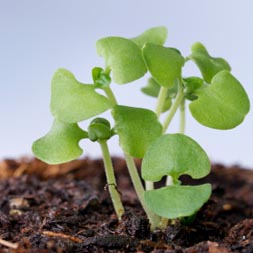
When the seedlings develop their first true sets of leaves, add half-strength water soluble fertilizer to their water – organic fish emulsion or seaweed fertilizers are great to use. Repeat every second week to provide good nourishment. Thin the seedlings or transplant them to larger containers as they grow. Before planting outdoors, harden-off the plants at least one week before the planting date. Take the transplants outdoors in the daytime and bring them in at night if frost is likely. Gradually expose them to lower temperatures and more sunlight. The use of hotcaps and frost blankets to cover early plantings will also aid in the hardening off process so the seedlings can adjust well to their new outdoor environment.

Transplanting Seeds

Transplant seedlings into the garden after the safe planting date on a calm, overcast day. Pack the soil around the transplant with as little root disturbance as possible. Sprinkle the plants with water, keeping the soil moist until the plants become established.

Popular Indoor Seed Start Dates

The exact dates you want to start seeds will vary depending on your local growing season, the varieties of plants you choose and what their needs are. In general, dates for the most popular produce include…

Vegetable Seed Starting Dates

  • February – Asparagus, celery, onion
  • March 1 – Broccoli, Brussels sprouts, cabbage, cauliflower, collards, kale, lettuce
  • March 15 – Eggplant, peppers, tomatoes
  • April 1 – Summer squash
  • April 15 – Cantaloupes, cucumbers, winter squash

Flower Seed Starting Dates

  • January/February – Begonia, carnation, geranium, impatiens, nicotiana, pansy, rudbeckia, salvia, snapdragon, verbena, vinca
  • March 1 – Ageratum, dahlia, dianthus, petunia
  • April 15 – Aster, calendula, celosia, marigold, zinnia

Use seed starting dates as a general guide to ensure your seeds have plenty of time to reach their full harvest potential before the weather turns in autumn. At the same time, consider staggering seed starting every few days to lengthen your harvest and keep your favorite vegetables and flowers coming even longer during the growing season. As you gain more experience with starting seeds, you’ll be able to carefully plan your seed calendar to ensure a lush, rich, long harvest season.

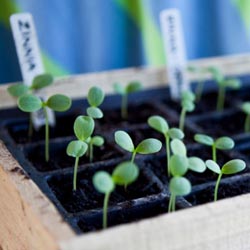
Old wooden seed tray with plant seedlings of various kinds (Zinnia and Pea).